CASE STUDY

Webhook Intake Gateway

From raw payloads to controlled operational intake

Project Overview

Webhook Intake Gateway was built around a common problem: external requests can arrive while the operational handoff behind them remains fragile. The workflow turns incoming webhook payloads into controlled intake by cleaning key fields, validating required data, and keeping invalid submissions out of the database.

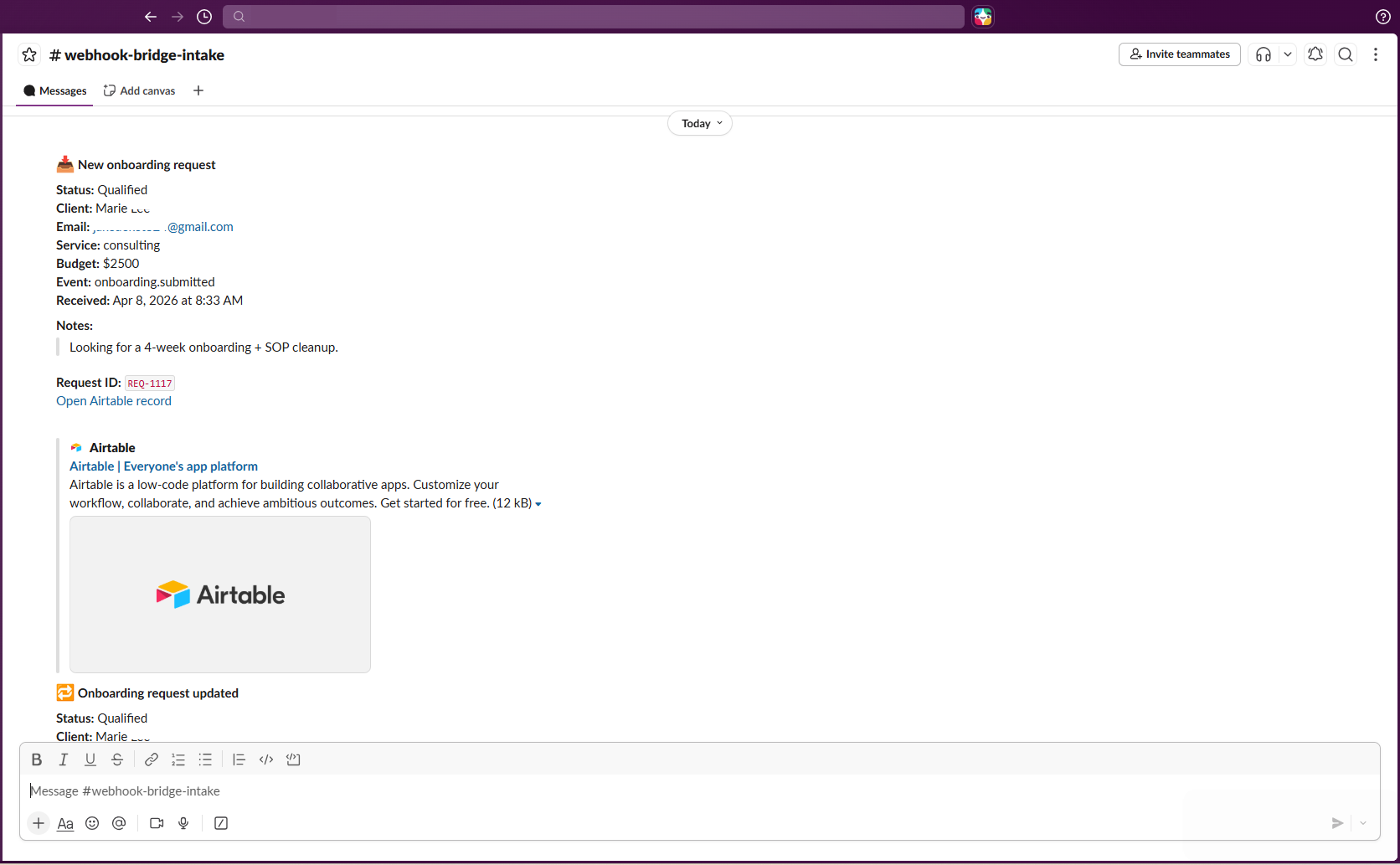
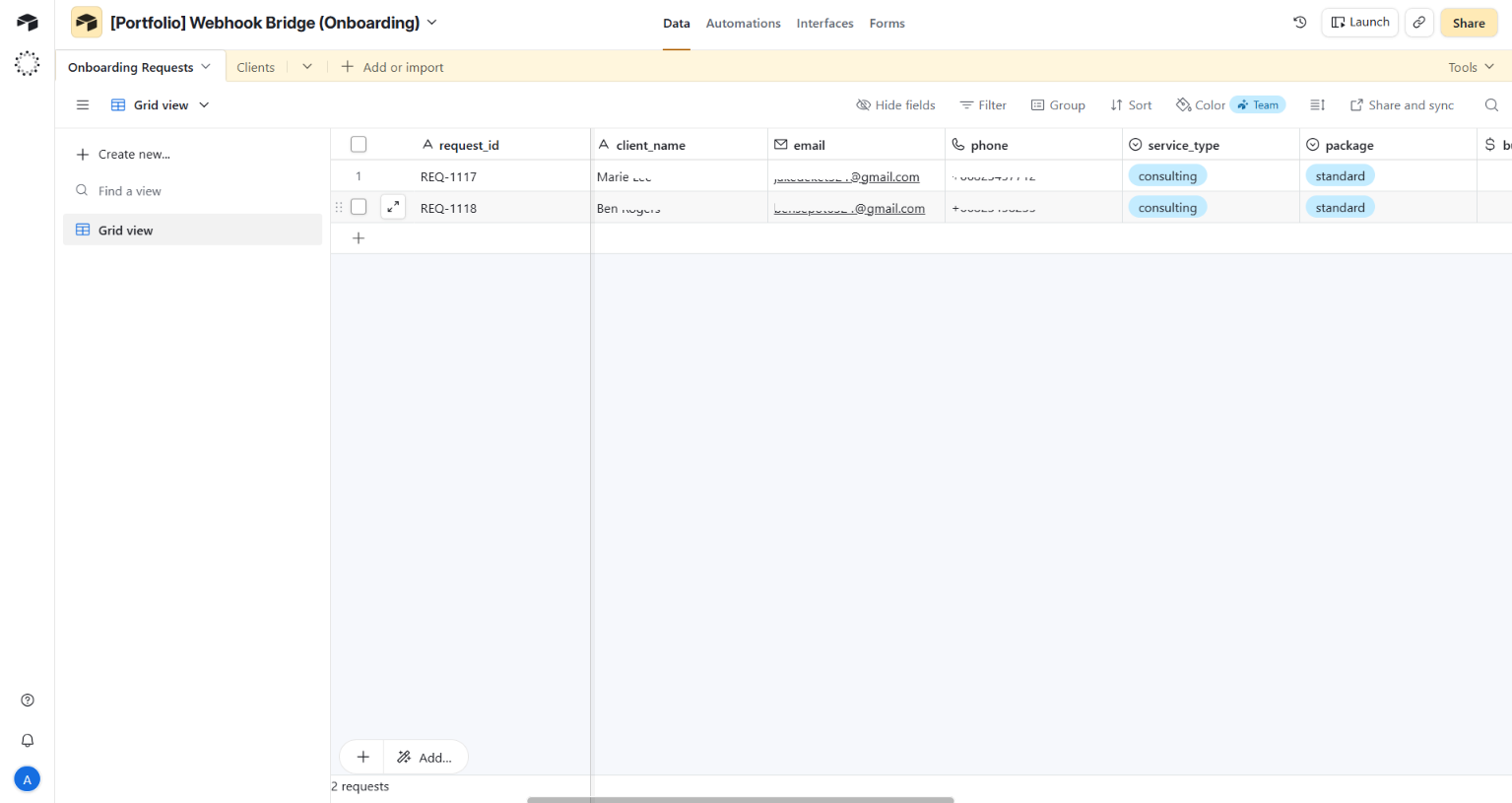
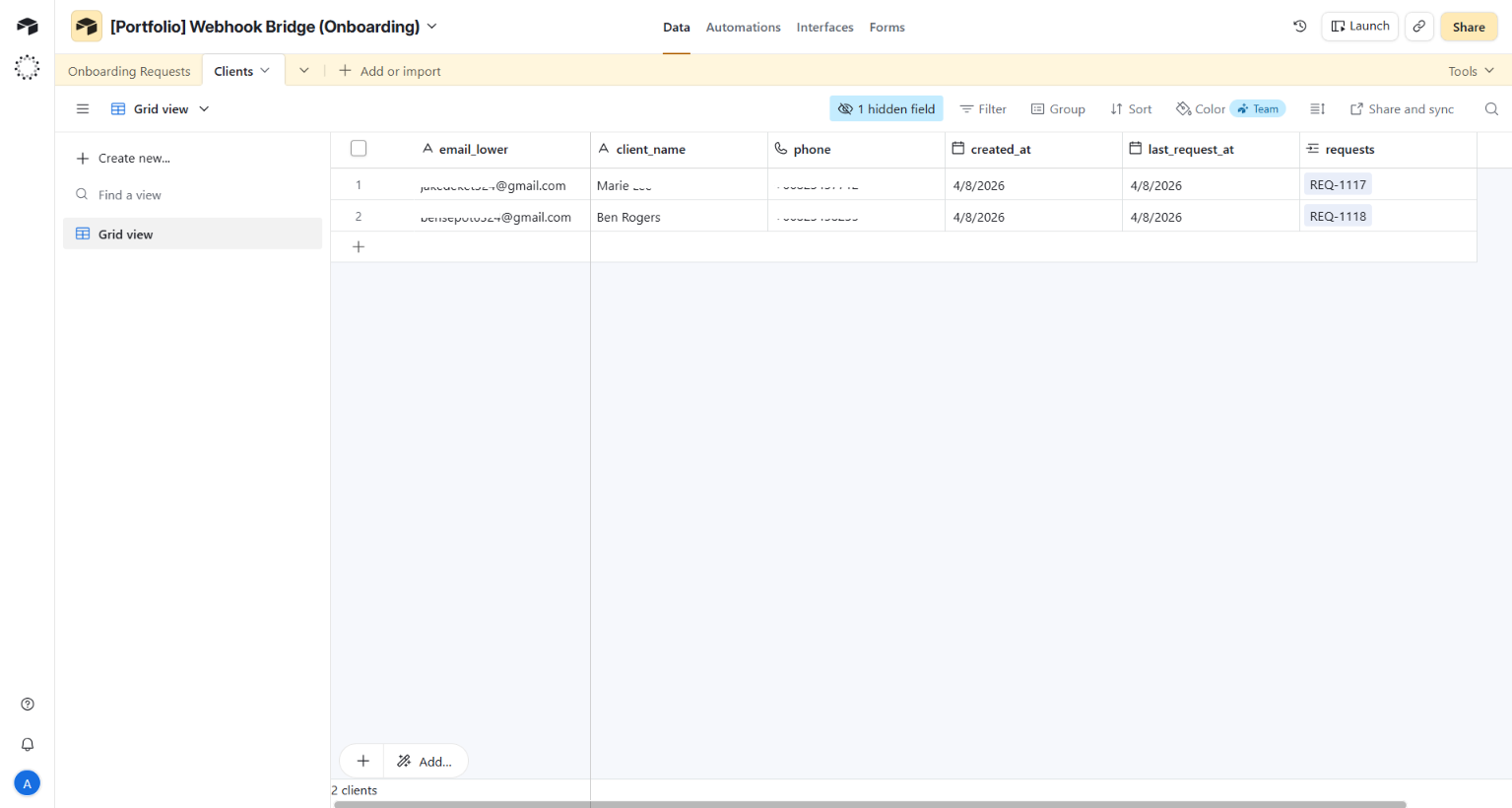
Valid requests are matched against existing clients and onboarding records before the system decides whether to update or create linked records. Invalid payloads are surfaced to the team for review. The result is less duplicate processing, better record quality, and clearer visibility into how each request was handled.

Problem

Incoming webhook requests could reach the system with missing, inconsistent, or repeated data, while the downstream records still depended on manual checks. Without a controlled intake layer, invalid submissions could enter the database, existing clients or requests could be duplicated, and the team had limited visibility into which payloads were accepted, rejected, or updated.
Solution

The automation creates a structured layer between incoming webhook data and the operational database. Each payload is normalized and validated first, then valid requests move through record lookups so the system can update existing records or create new linked ones.

Invalid requests are blocked and reported to the team instead of continuing downstream. By combining validation, matching, create-or-update logic, and team notifications in one process, the automation keeps intake records clean and makes each outcome easier to track.

Safeguards

Safeguards are built into the intake process before any record is created or updated. Required fields are checked first, emails and request IDs are cleaned for reliable matching, and existing records are reused when the same client or request is already present. Invalid submissions are blocked from the database and reported to the team instead of disappearing silently.

What was built

The build combines webhook intake, validation, record matching, and linked record management in one controlled workflow. It checks existing clients by normalized email and onboarding requests by request ID, then updates existing records or creates new ones as needed. Request status is assigned from the incoming service type, while team notifications provide visibility into both processed and rejected submissions.

Expected Impact

By controlling what reaches the operational database, the workflow reduces manual data cleanup, lowers the risk of duplicate or incomplete records, and keeps client and request information more consistent. Structured notifications also give the team clearer visibility into processed and rejected submissions, making the overall intake process easier to monitor and manage.

Pricing & delivery

Starting at $750

Estimated delivery 2–3 weeks

The Payload Flow

Workflow in motion

Inside the Workflow

Have a workflow that takes too much manual effort?

I’ll review the process and show you where automation could help.

Ask on WhatsApp