CASE STUDY

Weekly Operations Reporting

From manual reporting to one consistent weekly view

Project Overview

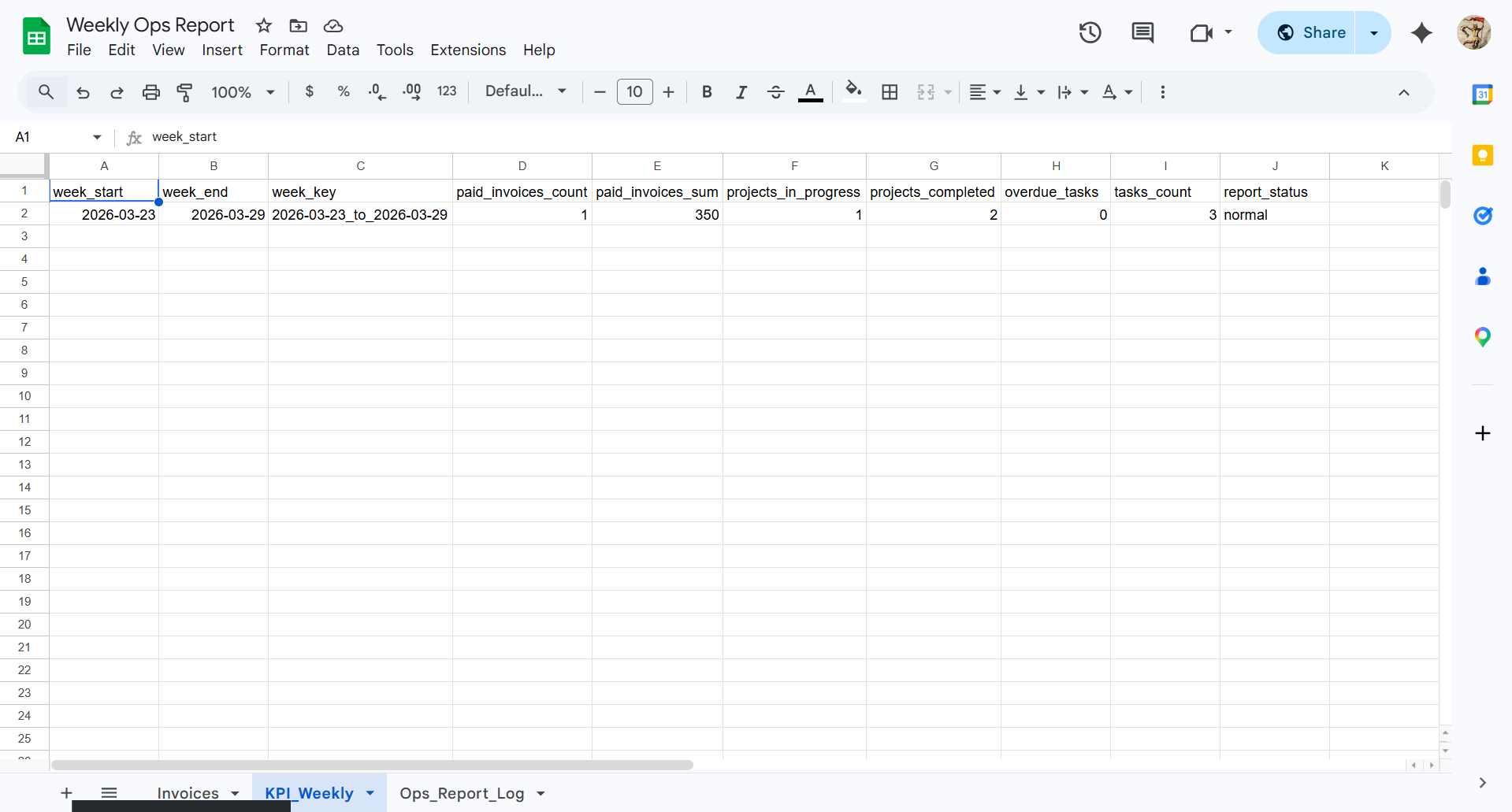
Weekly Operations Reporting was built around a recurring reporting process where operational data needs to be collected, reviewed, and shared at the start of each week. Instead of pulling information together manually from separate sources, the workflow creates one reporting cycle that gathers the relevant activity, calculates the agreed KPIs, and records the results in a shared weekly report.

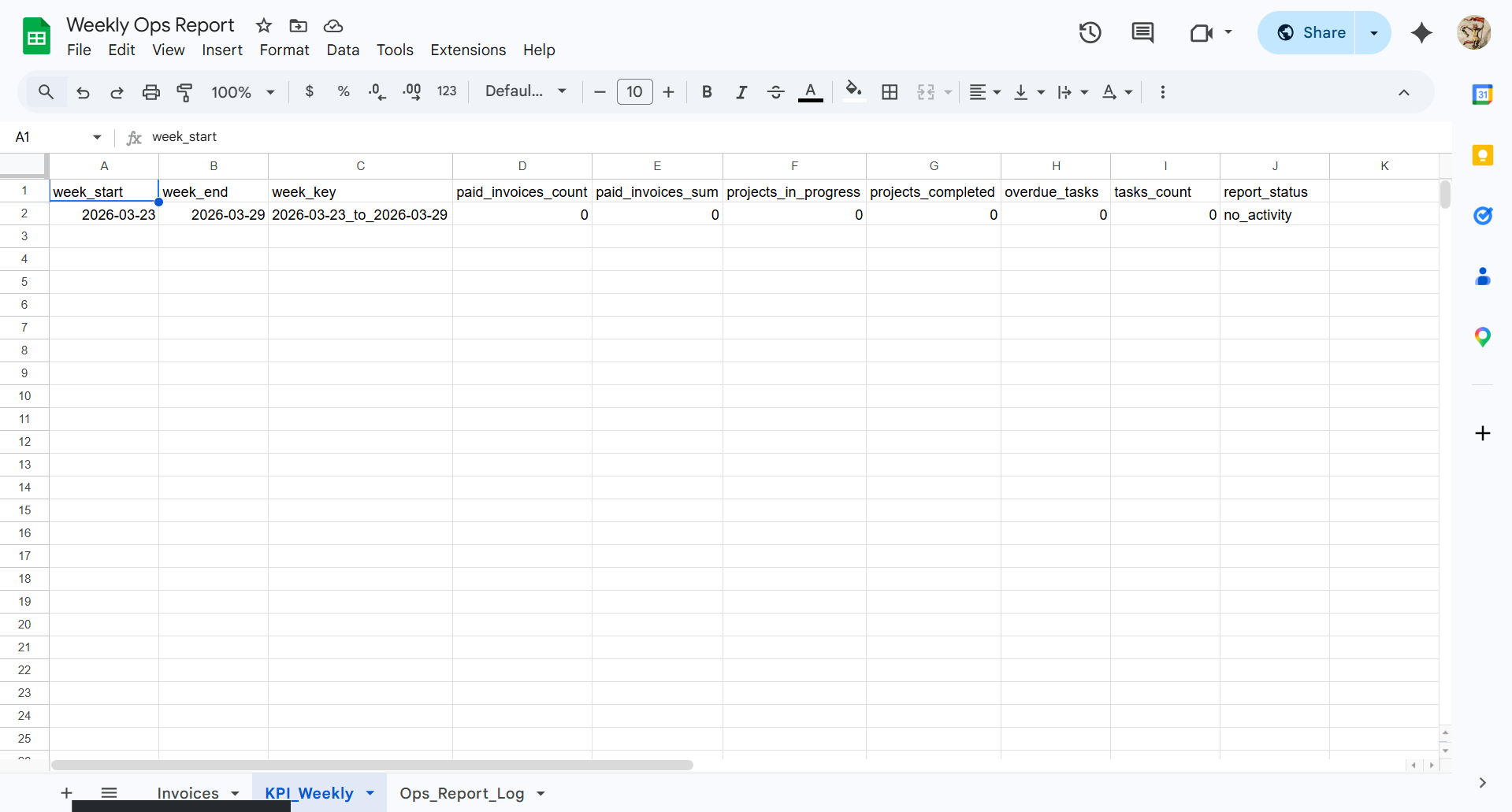
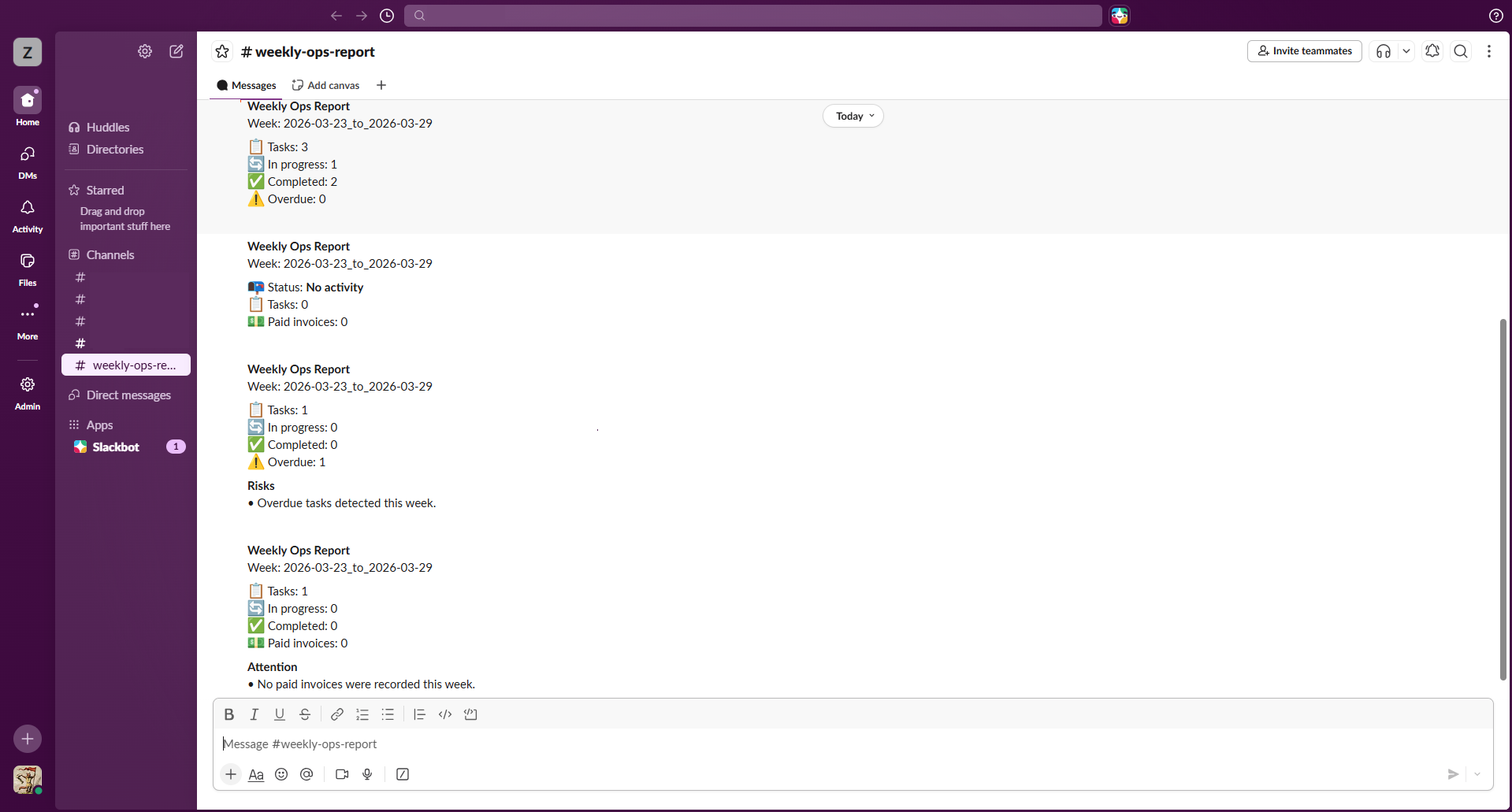
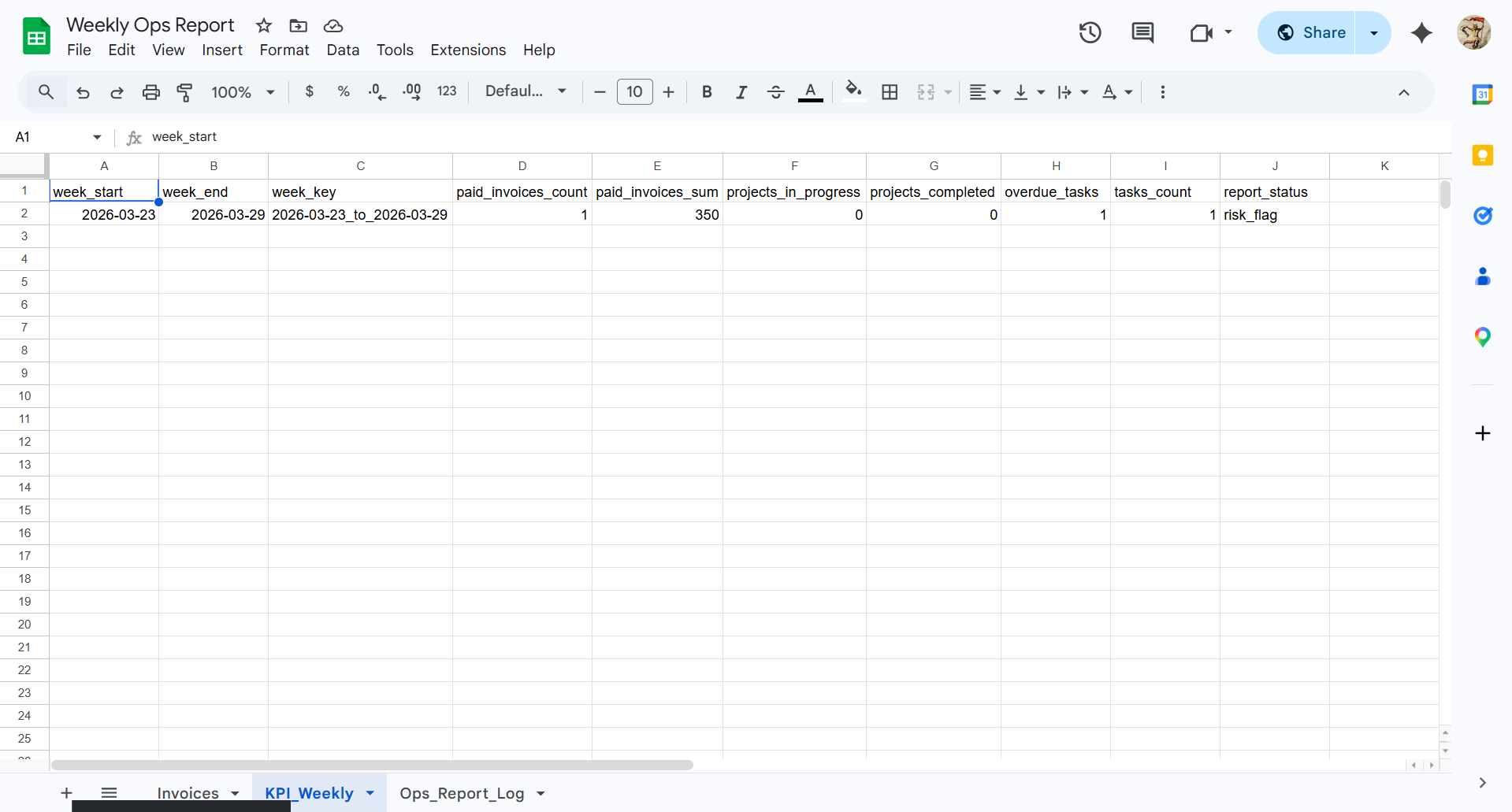
Rather than producing the same generic summary every week, the workflow uses the underlying data to determine which conditions need to be surfaced. Depending on the week’s activity, overdue work, and payment status, it can highlight normal performance, flag areas that need attention, or identify a week with little or no activity. This gives the team a consistent snapshot of what is happening and where attention may be needed.

Problem

The weekly operations report required several manual steps: collecting operational data from multiple sources, checking outstanding work, calculating the main KPIs, and deciding what needed attention. This increased the risk that overdue work, missing payment activity, or other important signals could be overlooked.
Solution

The workflow replaces the manual reporting routine with a repeatable weekly process. At the start of each reporting cycle, it collects operational data, calculates the main KPIs, and consolidates the results into one reporting view.

Then it evaluates the reporting conditions and determines which outcome should be surfaced. Normal activity can pass through as a standard update, while overdue work, missing payment activity, or a lack of activity can trigger a different report so the team sees the most relevant information for that week.

Safeguards

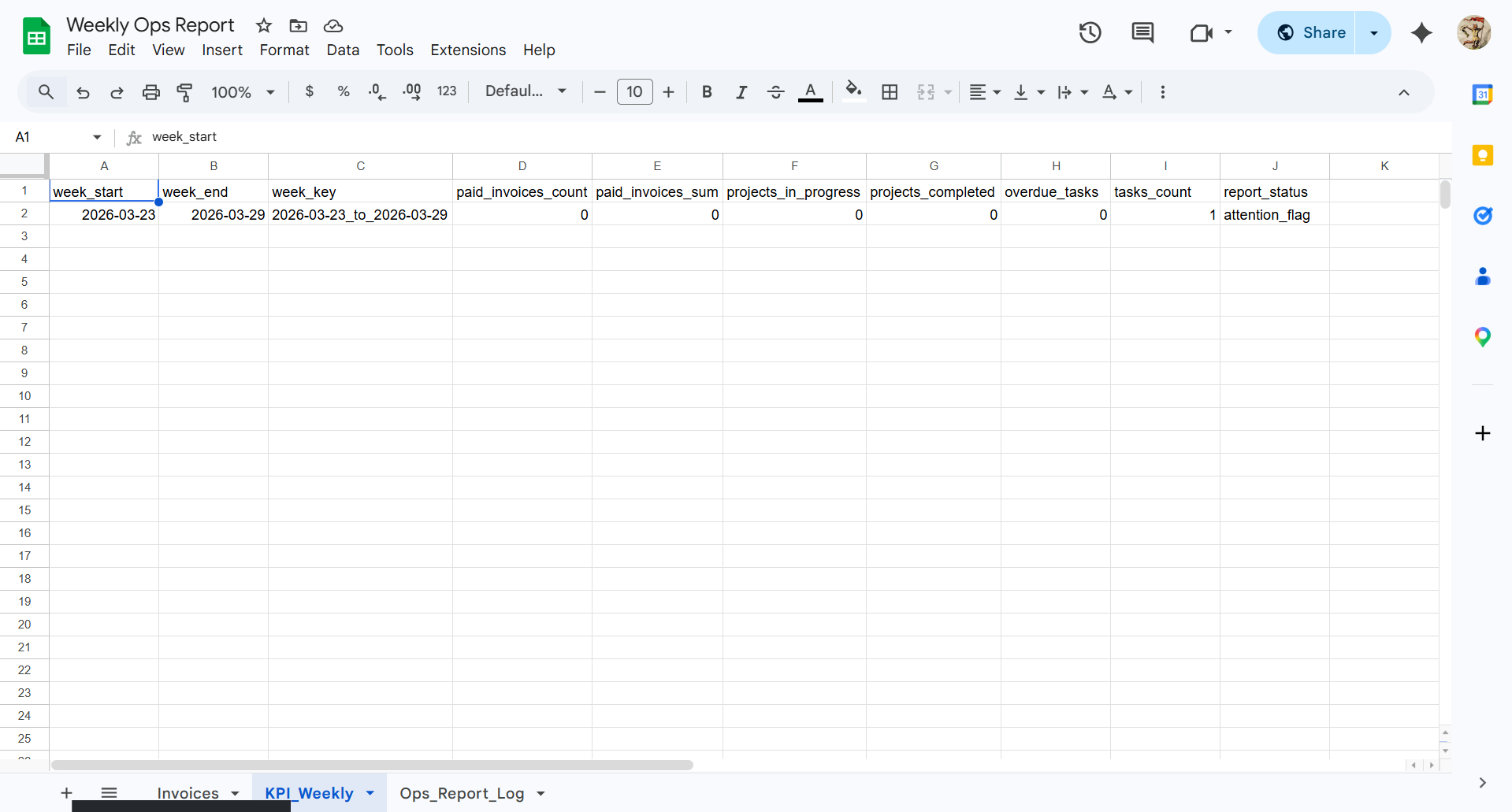
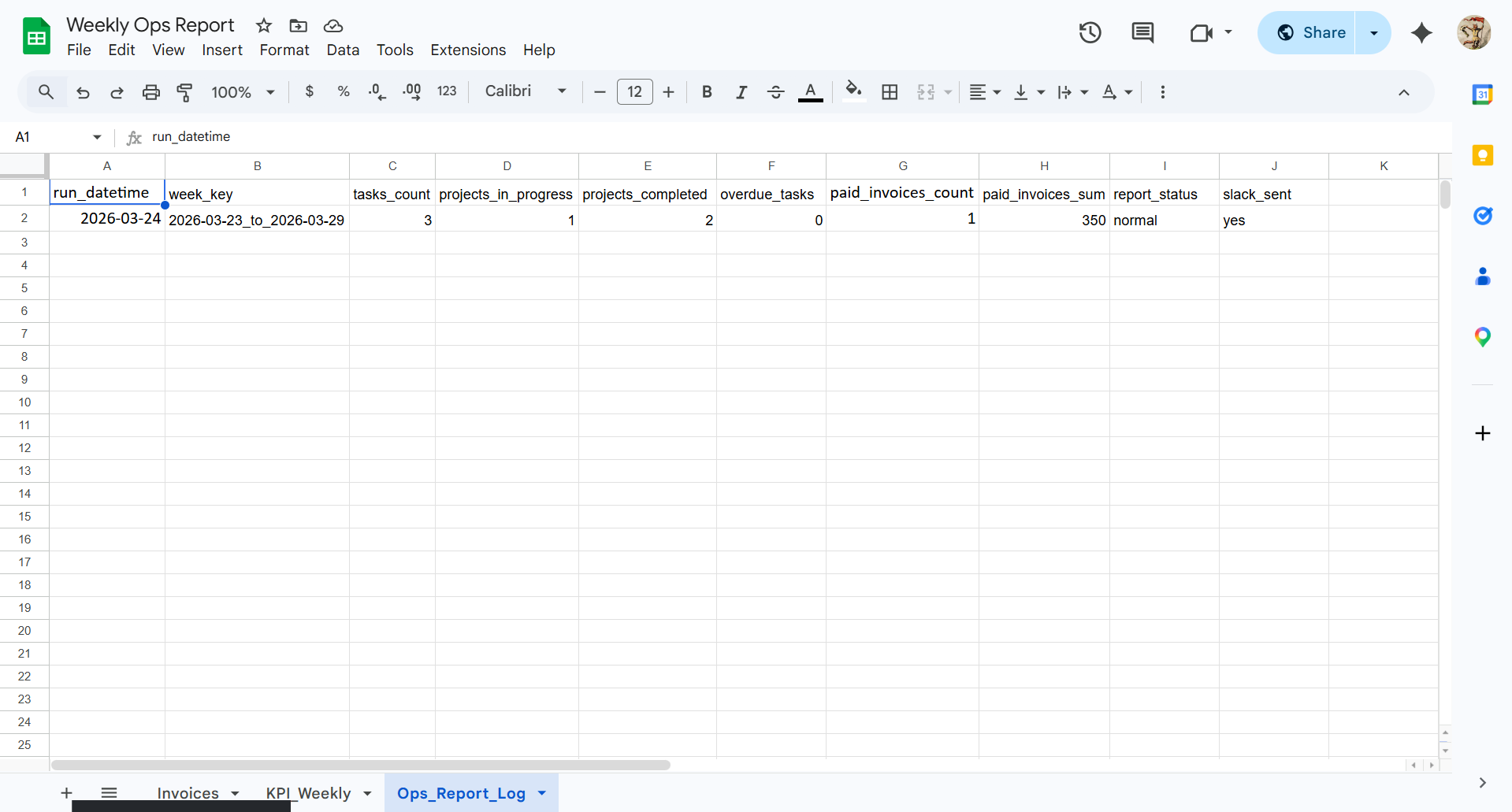
The reporting logic includes safeguards for missing activity, overdue work, and absent payment activity. Each condition is routed to the appropriate report instead of being treated as a normal week, while weeks without warning flags continue through the standard path. Weekly KPI values and audit history are stored separately, and dates are normalized before logging so reporting records remain consistent across cycles.

What was built

The build includes a scheduled reporting workflow that collects operational activity, calculates weekly KPIs, updates a shared reporting table, and routes the results into different report outcomes based on the underlying conditions. Each cycle determines the reporting status, delivers the appropriate update, and keeps a separate log of reporting activity.

Expected Impact

The workflow reduces the manual effort required to prepare weekly reports, giving the team clearer visibility into what needs attention. It surfaces overdue work and missing payment activity earlier, makes weekly updates easier to review, and maintains a clear reporting history for later reference.

Pricing & delivery

Starting at $600

Estimated delivery 1–2 weeks

The Reporting Flow

Workflow in motion

Inside the Workflow

Have a workflow that takes too much manual effort?

I’ll review the process and show you where automation could help.

Ask on WhatsApp